Introduction
Many UK parents face a daily struggle when it comes to getting their child dressed. Tears over socks, refusal to wear a school uniform or constant tugging at labels can leave families exhausted before the day has even begun. Clothing sensitivity in children is far more common than many realise, and it usually has a sensory explanation rather than a behavioural one. Support from professionals offering paediatric therapy guidance can help families better understand these challenges and identify practical ways to support daily routines. This guide explains the signs, causes and practical strategies that help families create calmer routines at home, nursery and school.
What Clothing Sensitivity Actually Means
Clothing sensitivity describes a child’s discomfort with the way fabrics, seams, labels or fastenings feel against their skin. It sits within a wider picture of sensory processing differences, where the nervous system reacts more strongly to everyday input than expected. For some children, a soft cotton t-shirt feels scratchy and overwhelming. For others, a single sock seam can derail an entire morning.
Why Does My Child Hate Wearing Clothes?
If you have ever wondered why your child hates wearing clothes, the answer often lies in tactile processing. The skin sends constant signals to the brain, and for children with tactile sensitivity, those signals can feel intense or even alarming. Texture, pressure, temperature and movement against the body all play a part. Understanding this helps parents respond with empathy rather than frustration.
Tactile Defensiveness
Tactile defensiveness occurs when the nervous system reacts intensely to everyday sensations that most people hardly notice. A clothing label against the skin or fabric brushing the arm may feel extremely irritating or distressing. Some children tug at their clothes, avoid certain outfits or become upset during dressing routines.
Pressure and Fit Preferences
While some children feel calmer in close-fitting clothing that provides steady proprioceptive feedback, others are far more comfortable in soft, loose garments with minimal restriction. These differences are linked to how each child processes sensory information and physical awareness.
Sensory Triggers in Everyday Garments
Common clothing sensory triggers include seams across the toes, scratchy collars, stiff jeans, woolly jumpers, elasticated cuffs and rough shoe linings. Even one unnoticed trigger can unsettle a child who cannot yet describe the source of their discomfort. These sensitivities can also influence movement habits at home, including indoor toe walking, as some children naturally seek more comfortable sensory experiences underfoot.
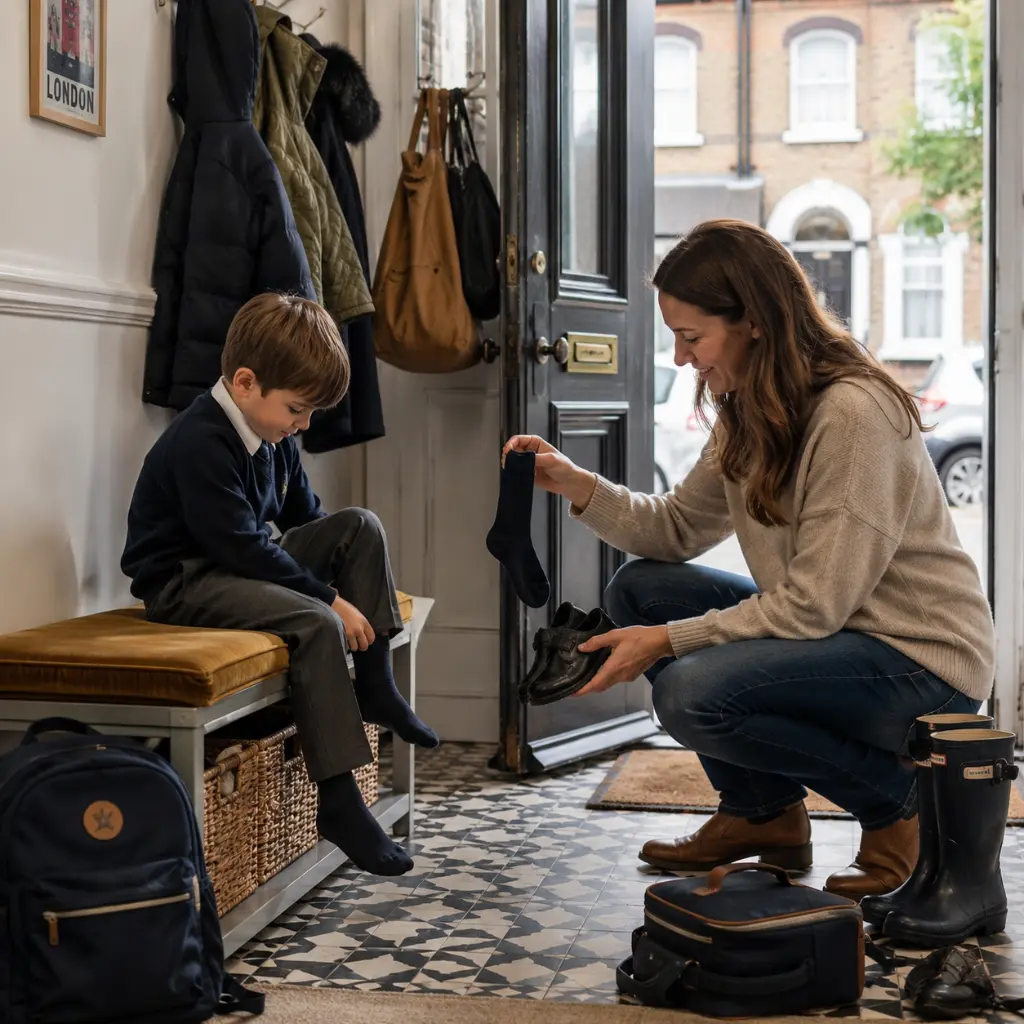
Signs Your Child May Have Sensory Issues With Clothing
Recognising the signs early helps parents take meaningful action. Children rarely describe sensory discomfort in adult terms, so their behaviour usually gives the clearest clues.
- Removing clothes repeatedly throughout the day
- Wearing the same outfit for days at a time
- Complaining that clothes feel itchy, tight or wrong
- Becoming distressed by school uniform requirements
- Choosing whether inappropriate clothing is for comfort
These behaviours often appear alongside wider sensory processing challenges. A child who struggles with clothing may also react to loud sounds, food textures or busy environments.
How Clothing Sensitivities Affect Daily Life
Clothing battles rarely stay contained to the bedroom. They ripple into the school run, classroom focus and family wellbeing.
Impact on Morning Routines
When dressing becomes a source of distress, the effects stretch well beyond the bedroom. Parents may find themselves negotiating, problem solving and managing meltdowns under time pressure, arriving at the school gates feeling tense and depleted. For children, the emotional cost of a difficult dressing experience can affect their readiness to engage once they reach nursery or school.
Impact on School and Nursery
School uniform sensory issues are a common concern. Stiff trousers, polyester shirts and rigid shoes can create constant low level discomfort. This often shows up as fidgeting, restlessness or difficulty concentrating during lessons and group activities. Children who are already struggling with clothing discomfort may also find floor sitting in a nursery more challenging, particularly when activities involve prolonged contact with textured mats or floor surfaces.
Impact on Family Wellbeing
Repeated clothing related meltdowns affect parents and siblings, too. Families may begin avoiding outings, social events or activities that require specific outfits. Over time, this can shrink a family’s world in ways that feel unfair to everyone involved.
Clothing Features That Often Help
Small wardrobe changes can transform daily comfort. The features below often suit sensory sensitive children:
- Seamless socks or socks with smooth interior stitching
- Tag free clothing with printed labels
- Soft cotton, bamboo or jersey fabrics
- Elastic free waistbands or adjustable closures
- Flat seams along arms, legs and shoulders
- Snug bodysuits for children who prefer deep pressure
- Loose, flowing garments for children who prefer minimal contact
Trial and observation matter most. What soothes one child may overwhelm another, so building a sensory friendly wardrobe is usually a gradual process.
How to Help a Child With Clothing Sensory Issues
Supporting a child through clothing sensitivity takes patience, planning and gentle persistence. The following strategies often help families settle into calmer routines.
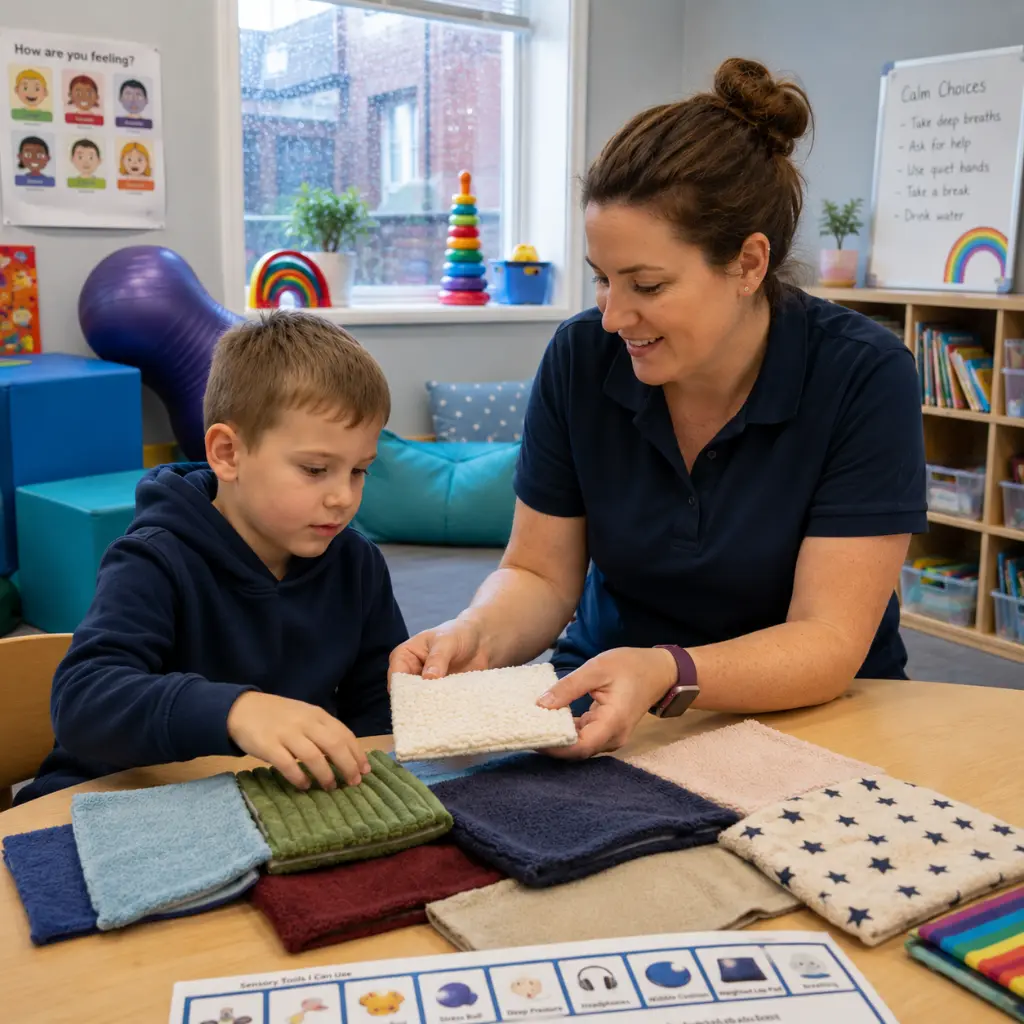
Prepare the Body Before Dressing
A short period of proprioceptive input before getting dressed can calm the nervous system. Bear hugs, wall pushes, jumping games, or animal walks all give the body organising feedback. This often makes the transition into clothing far more manageable.
Use Deep Pressure Input
Deep pressure sensations feel reassuring and grounding for many sensory-sensitive children. A firm cuddle, gentle arm squeezes, a weighted lap pad or a slow massage of the arms and legs can support emotional regulation before getting dressed. Consistent calming input may also reduce frustration during busy morning routines.
Lay Out Clothes the Night Before
Predictable routines can lower both sensory and emotional stress. Choosing outfits together the evening before removes rushed decisions and gives children time to prepare for particular textures, fabrics or layers. Visual preparation often helps children feel more in control of the process.
Build a Consistent Dressing Sequence
Many children respond well when dressing follows the same step-by-step order each day. A simple routine such as pants, socks, trousers, top, jumper and shoes creates familiarity and reduces unexpected sensory experiences. Repetition and structure can make transitions feel safer and easier to manage.
Introduce New Clothing Gradually
Large wardrobe changes can feel overwhelming for children with sensory sensitivities. Introducing unfamiliar garments slowly during calm moments at home allows children to explore new textures at their own pace. Short wearing periods and positive reinforcement often improve acceptance over time.
Conclusion
Clothing sensitivity in children is a genuine sensory experience, not stubbornness or fussiness. With understanding, the right wardrobe choices and consistent sensory strategies, dressing routines can become calmer and more comfortable for everyone. If your child shows ongoing distress around clothing, early support often prevents difficulties from growing. The team at PT Kids is here to help families across the UK with practical guidance and paediatric occupational therapy designed around each child’s individual needs.
[wpcode id=”3867″]