Introduction
Seated group activities form a regular part of nursery life across the UK, from circle time and story sessions to group play. Yet for some children, this seemingly simple posture presents a real challenge. When children avoid floor sitting, it is rarely a behavioural choice. More often, there is an underlying physical, sensory or developmental reason. Understanding what may be happening helps parents, carers and nursery staff respond with patience and the right support. Guidance from professionals experienced in paediatric therapy can also help families better understand the challenges involved. This guide explores the common causes, signs to look out for and practical adjustments that make seated activities easier for every child.
Understanding Floor Sitting in Early Years Settings
Nurseries across the UK use floor sitting because it brings children together for shared learning and play. Sitting on a carpet or mat encourages connection during songs, stories and group games. For most children, settling into a cross-legged posture feels natural. For others, it can be tiring or uncomfortable, which often shows through fidgeting, frequent position changes or wandering away from the group.
Common Reasons Children Avoid Floor Sitting
There is usually a real reason behind a child’s reluctance. Floor sitting difficulties in children often connect to physical development, sensory needs or simple physical comfort. Recognising the cause early allows families and nursery staff to respond with kindness and practical help. For some children, the same sensory differences that make certain fabrics uncomfortable can also affect how they respond to floor surfaces and close physical contact during group activities.
Postural Control and Core Strength
Holding an upright position on the floor depends on strong postural control. Children who are still developing their core strength may slouch, lean on a friend or shift constantly. Without back support, the effort of staying upright can quickly tire them. These signs suggest a child would benefit from gentle work on core stability and seated balance.
Hip Flexibility and Lower Body Comfort
Cross legged sitting problems in children are frequently linked to hip flexibility. Tight hip muscles make positions like criss cross applesauce uncomfortable to maintain for long. Some children naturally have less range of motion, and others may have subtle differences in muscle tone. Stretching legs out, rubbing the knees can all signal genuine physical discomfort.
Sensory Processing Challenges
Sensory processing shapes how a child experiences floor seating. Hard surfaces, scratchy mats or being too close to peers can feel overwhelming for some children. Others crave proprioceptive input and feel restless when asked to stay still. These reactions are not misbehaviour. They reflect real sensory experiences that benefit from thoughtful classroom seating adaptations.
Coordination and Motor Planning
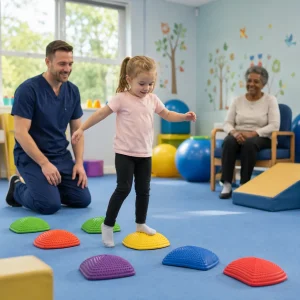
Settling into and out of floor sitting positions requires motor planning skills and balance. Children who find transitions tricky may avoid floor activities altogether. You may notice slower movements, hesitation when joining the group or reluctance to sit down with others. Targeted support from paediatric occupational therapy can build these skills over time.
Floor Sitting Positions and Why They Matter
Children naturally adopt several different floor sitting positions. Each offers a different balance of stability, comfort and muscle engagement. Knowing the options helps adults guide children toward postures that suit their bodies on any given day.
Cross Legged or Tailor Sitting
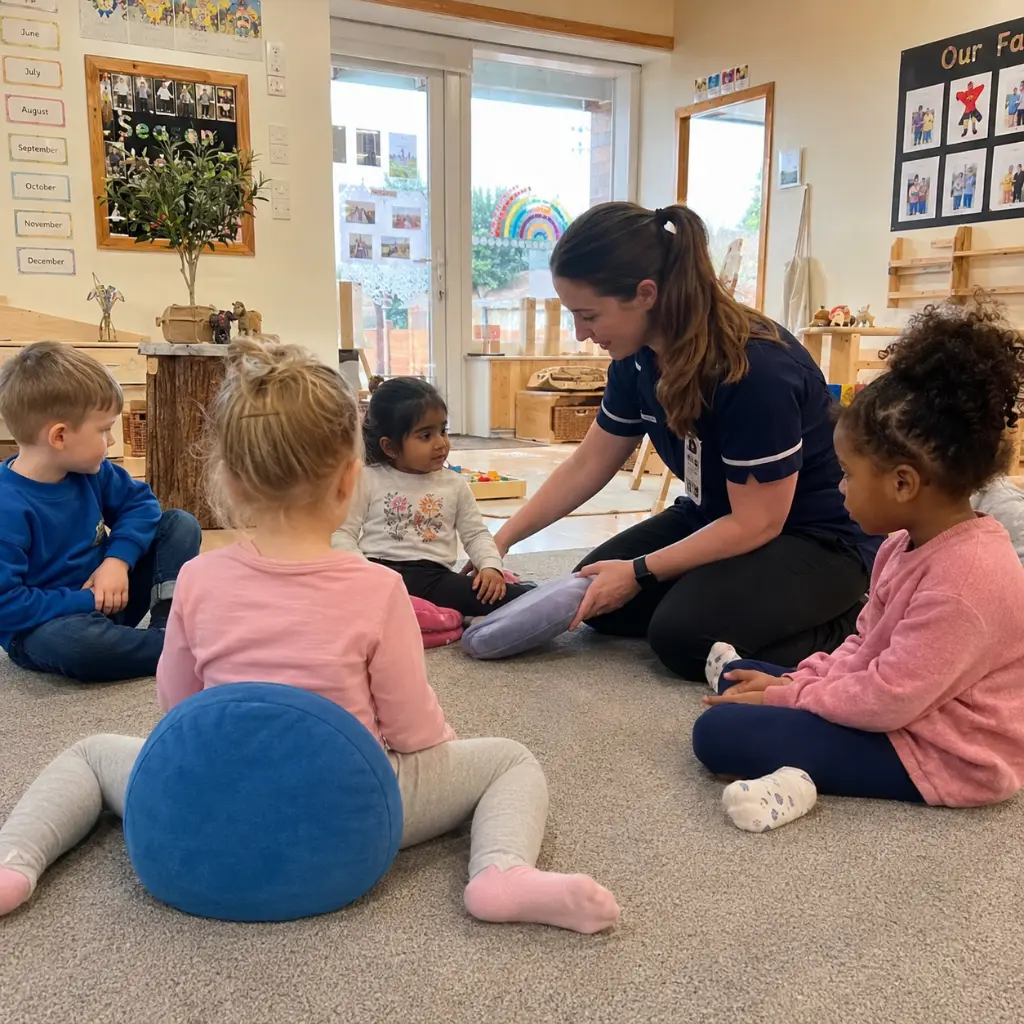
The classic cross-legged or tailor sitting posture is commonly used during circle time and story sessions. It relies on reasonable hip mobility and steady postural control. While some children settle easily in this position, others may become tired after only a short period.
Long Legged Sitting
Long-legged sitting, with the legs stretched out in front, creates a broader base of support. This option often feels easier for children with tighter hips, although remaining upright for long periods may still challenge trunk stability.
Side Sitting and Mermaid Sitting
Side sitting, sometimes called mermaid sitting, allows children to rest weight through one side of the body. It can feel more relaxed during longer seated tasks and offers a useful alternative to cross-legged sitting. Swapping sides regularly encourages balanced muscle use.
Short Kneel and Tall Kneeling
Short kneel sitting, tall kneeling and half kneeling activate postural muscles in slightly different ways. These positions are often helpful during brief activities and can gradually improve body awareness and seated control.
W Sitting Position
Many children choose the W sitting position because it provides a strong sense of stability. Spending extended periods in this posture, however, may reduce opportunities to develop postural strength and movement control. Encouraging a range of sitting positions is usually more beneficial than constantly correcting posture.
Practical Support Strategies for Nurseries and Homes
Small changes often bring big improvements. Both parents and early years staff can use these ideas to make seated activities more accessible.
Offer Flexible Floor Seating
Flexible floor seating supports different bodies and sensory needs. Cushions, wedges, floor mats and small stools give children real choice. Wobble cushions and therapy ball seating add gentle active sitting for those who benefit from movement.
Build Core Strength Through Play
Every day play strengthens the muscles needed for sustained sitting. Animal walks, climbing, crawling games and tummy time all support gross motor development naturally. Active play at home and nursery builds sitting tolerance over time.
Plan Movement Breaks
Short, regular movement breaks between seated activities help children reset. A quick stretch, action song or sensory pause can transform the next floor session. This approach works particularly well for children with sensory processing challenges or attention needs.
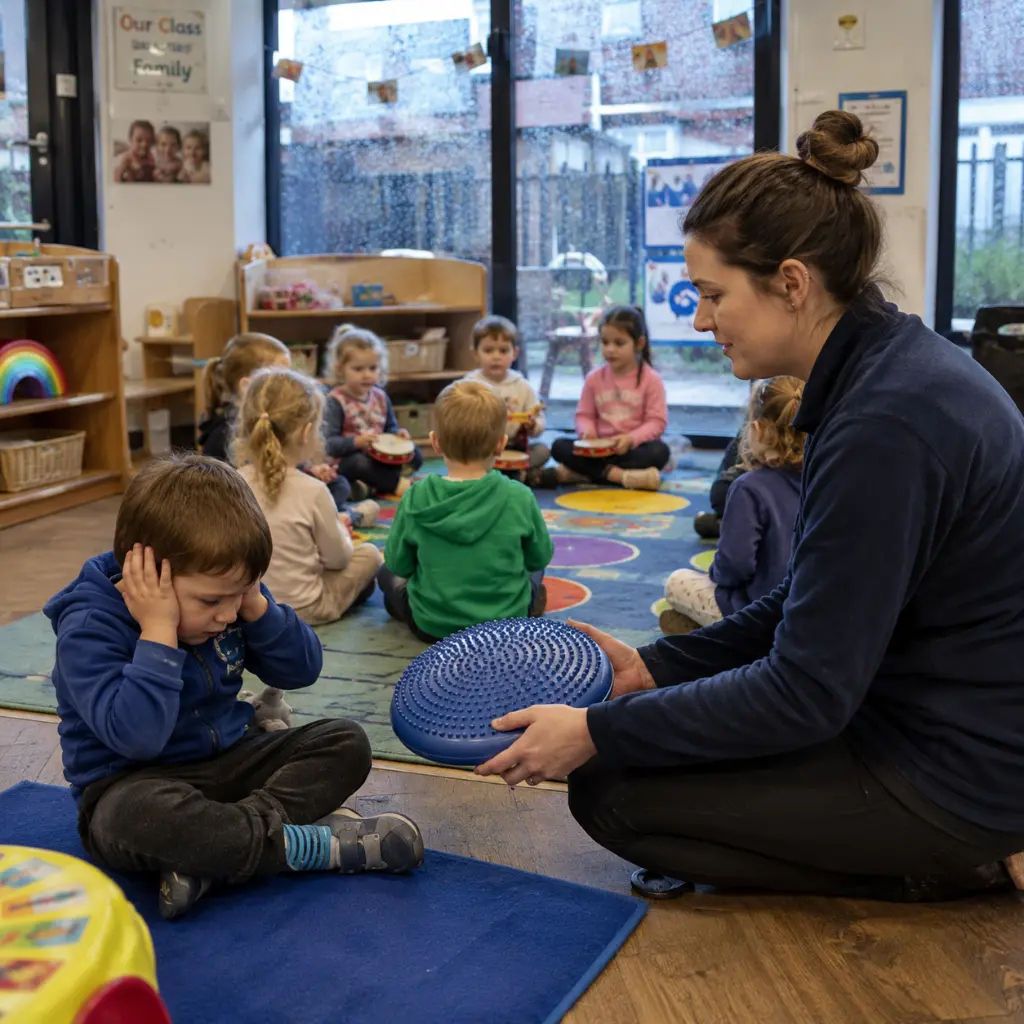
Create Sensory Friendly Spaces
Soft mats, defined personal space and quieter zones help children who find busy floor environments overwhelming. Thoughtful adjustments to the nursery learning environment can completely change a child’s experience of group activities.
When to Seek Professional Support
If floor sitting difficulties continue despite practical changes, it may be time to speak with a paediatric therapist. Persistent discomfort, ongoing avoidance of nursery activities or wider concerns about coordination all deserve a closer look. PT Kids offers experienced paediatric physiotherapy and occupational therapy across the UK, working alongside families, nurseries and schools to put meaningful support in place. Early intervention often makes the biggest difference, and a friendly conversation with our team costs nothing.
Conclusion
When children avoid floor sitting in nursery activities, there is usually a genuine reason behind it. From core strength and hip flexibility to sensory processing and motor planning, many factors shape how a child experiences seated tasks. With understanding, flexible seating choices and the right professional support where needed, every child can feel more comfortable and included. If you have concerns about your child’s development, the team at PT Kids is here to help with practical, family centred guidance.
[wpcode id=”3865″]