Introduction
Little hands are busy from the very start, gripping fingers, grasping toys, and slowly learning to do up buttons and hold a crayon. As all this unfolds, many parents pause and wonder whether their child needs a helping hand, quite literally, with hand-strengthening exercises.
For most children, this strength builds naturally through everyday play, with no special equipment required. This guide, shared by our team of paediatric therapists, explains what hand strength does, and offers plenty of enjoyable ways to support it at home.
How hand strengthening exercises support daily life
It is easy to overlook just how much our hands do. Strong, capable hands help a child fasten a coat, hold cutlery, turn pages, use scissors, and open their own snack at lunchtime.
That strength comes in a few forms. There is the firm grip for holding and carrying, the neat pinch between thumb and finger for small items, and the endurance to keep going without little hands tiring too soon.
When these come together, children feel more independent and confident. Regular hands-on play, alongside general active movement, is how most children build hand strength with no special equipment or dedicated exercises required. These everyday hand skills also support many of the practical tasks children encounter as they prepare for Reception and school life .

Strong hands start with a stable base
Here is something our therapists often share with families. Precise finger movements are much easier when the shoulders, trunk and posture are steady, because the hand works best from a stable base.
That is why big, whole-body play matters so much for little hands. Activities like climbing, wheelbarrow walks on the hands, wall push-ups and animal walks all build the shoulder and core stability that fine hand skills rely on.
If you would like ideas in this area, our guide to playful ways to build shoulder and arm strength is a helpful place to begin.
Everyday hand strengthening activities at home
Some of the best practices hide inside daily routines, where children build strength without it ever feeling like an exercise. The trick is to invite little hands to do real, purposeful jobs.
In the kitchen, children can stir a thick mixture, knead dough or squeeze half a lemon. Around the house, wringing out a wet sponge, using a spray bottle to water plants, and opening their own containers and packets all give hands a satisfying workout.
Out in the garden, digging, pulling up weeds and carrying a small watering can add even more. These everyday moments are wonderfully effective, and they build independence at the same time.
Playful hand exercises for children
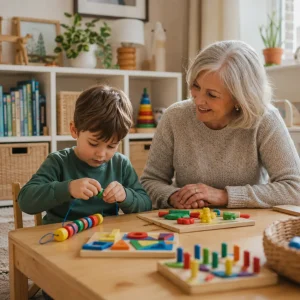
Play offers endless ways to strengthen hands, and children rarely notice they are practising at all. Toys and craft materials are perfect for this.
Rolling, pinching and squashing playdough is a classic favourite, and you can hide small beads inside for little fingers to dig out. Clipping pegs around the edge of a box, using tongs to move pom-poms, and threading beads onto strings all build precision and power together.
Building with small blocks, tearing and scrunching paper for collages, and popping bubble wrap are simple, giggle-filled options too. Rotating through a few keeps things fresh and fun.
Turning hand strengthening exercises for kids into a habit
You do not need a special timetable or a long list of drills. A little and often, folded into the day, works far better than an occasional big push.
Follow your child’s interests, keep everything playful, and pair new ideas with things they already enjoy. Praising effort rather than the result helps children stay keen to have a go.
Many families find that everyday jobs become the best hand-strengthening activities. Scooping pet food, watering plants or helping with cooking often become favourite routines that quietly build strength.

When hand strengthening activities for children could use expert input
Children build these skills at their own pace, and there is genuinely no need to rush. Still, a little tailored support can be reassuring and helpful if you would like it.
You might consider a friendly assessment if everyday tasks such as doing up buttons, using scissors or colouring feel like hard work for your child, or if their hands seem to tire quickly. If these difficulties are accompanied by persistent clumsiness or challenges with balance and coordination, it may also be worth exploring whether your child needs a little extra support with their motor skills. An occupational therapist can look at the whole picture, from posture to grip, and suggest activities matched precisely to your child.
You can read how occupational therapy builds fine motor confidence, or explore the support our team offers families to see how getting started works. Because we support children and young people up to the age of 19, help is available whether your child is a toddler or already at school.
Conclusion
Strong hands are quietly earned, not taught in a single sitting. Every squeezed sponge, kneaded lump of dough and stubborn jar lid is another small deposit into a skill your child will use for life.
The lovely part is that none of it feels like work to them. Follow what your child already loves doing, add a little squeeze and pinch and pull along the way, and their hands will grow capable through sheer enjoyment. Should those little hands ever need a bit more support, the occupational therapy team at PT Kids is glad to help.