Introduction
The moment a Reception place is confirmed, it can suddenly feel very real. Between the excitement and the questions, many parents wonder whether their child is truly ready for the big step ahead.
Here is the part that takes the pressure off: getting ready for school is mostly about the everyday things you are probably doing already. Drawing on the experience of our children’s development specialists, this school readiness checklist walks you through the skills that help most, along with gentle, playful ways to build them at home.
What a school readiness checklist actually covers
It helps to know what schools are really hoping to see. According to UK government guidance, school readiness is about everyday skills like communication, independence and confidence, rather than knowing the alphabet or counting to ten.
In practice, that covers a handful of friendly areas: looking after themselves, talking and listening, moving and coordinating, and feeling secure enough to have a go. None of it requires formal lessons.
Best of all, these are skills that grow through ordinary family life. Every shared story, every attempt at a zip, and every turn taken in a game is quietly doing the work.

Your school readiness checklist at a glance
Everyday independence
- Uses the toilet and washes hands with a little help
- Puts on a coat and shoes, and has a go at zips
- Uses a fork and drinks from an open cup
- Opens a lunchbox and packets at snack time
- Recognises their own name and belongings
- Helps to tidy toys away
Talking and listening
- Shares what they need and asks an adult for help
- Listens to a short story and stays with it
- Follows a simple two-step instruction
- Takes turns and joins in with other children
- Begins to talk about how they feel
Moving and coordinating
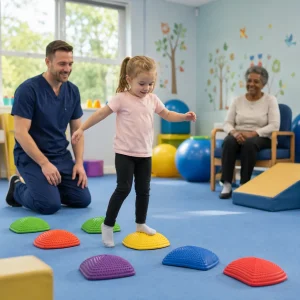
- Runs, jumps, climbs and balances with growing confidence
- Sits comfortably at a table for a short activity
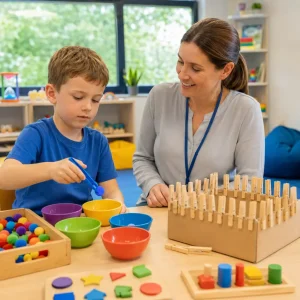
- Holds a crayon to make marks and draw
- Has a go at using child-safe scissors
Confidence and routines
- Separates from you with reassurance
- Manages a simple daily routine
- Feels happy to try something new
Everyday independence and Reception readiness
A big part of settling into a busy classroom is being able to manage small tasks alone. When children can look after themselves a little, they feel capable and free to focus on making friends and learning.
You can build the independence skills listed above gently at home, without any pressure. Our guide to practical ways to teach getting dressed offers step-by-step ideas, and if mealtimes are a focus, you may find helping your child eat more independently useful too.
Communication and social school readiness skills
Being able to share what they need is one of the most valuable things a child can bring to Reception. This is less about perfect speech and more about feeling able to speak up, and about listening well enough to follow what is happening around them.
If you would like ideas or reassurance about talking and listening, your child’s nursery key person and health visitor are excellent sources of support, alongside the government’s Best Start in Life resources.
Physical development and school readiness
Moving with confidence underpins so much of the school day, from carrying a tray to sitting comfortably at a table and joining in at playtime.
Whole-body play is what builds the coordination and core strength behind steady sitting and active learning. If your child moved around by bottom shuffling rather than crawling, this is usually a normal variation of early development and does not prevent them from becoming ready for Reception. Building hand strength and getting comfortable holding drawing tools then supports early mark making and using child-safe scissors.
These finer skills are a natural area for occupational therapy, and you can read about how occupational therapy strengthens fine motor skills if you would like to understand the building blocks. Our specialist physiotherapists can also support the movement and coordination that active play depends on.
Simple school readiness activities to try at home
None of this needs to feel like homework. The most effective preparation looks and feels like play, woven into the days you already share.
For talking and listening, try story time with lots of questions, singing nursery rhymes, and playful sound games like spotting things that start with the same noise. For little hands, playdough, threading pasta onto string, junk modelling and jigsaw puzzles all build strength and control.
For confidence and routine, games of pretend school, a gentle morning practice run, and letting your child help with everyday jobs like laying the table all work beautifully. An obstacle course in the garden or living room adds movement and giggles in equal measure.

Is your child ready for reception?
It is worth remembering that readiness is a journey rather than a test, and children arrive at it in their own time and their own way. There is no single moment when everything clicks, and there is always room to keep practising once the term begins.
Focus on what your child can already do and celebrate each small step. Their nursery key person can share how things are going in the setting, and schools are wonderfully experienced at welcoming children with all kinds of strengths and needs.
If you would like a little extra help with the physical, coordination or self-care pieces of the picture, our team is glad to support you. You can explore the ways our team supports families to see how a friendly assessment works.
Conclusion
The most important preparation for Reception rarely looks like preparation at all. It is the running commentary at the supermarket, the shoes attempted the wrong way round, the bedtime story read one more time.
None of it needs a checklist pinned to the fridge. Keep talking, playing and letting your child do things for themselves, and by September the classroom will feel less like a leap and more like the next happy step. And for the movement, coordination and self-care side of getting ready, PT Kids is here whenever a familiar, friendly hand would help.