
Children are not small adults. Their bones are still growing, and the places where tendons attach to growing bone are often the weak link. PT Kids provides specialist children’s physiotherapy for sports injuries and musculoskeletal (MSK) pain at our clinic in Everton, Doncaster, for babies through to 19-year-olds. No GP referral needed.
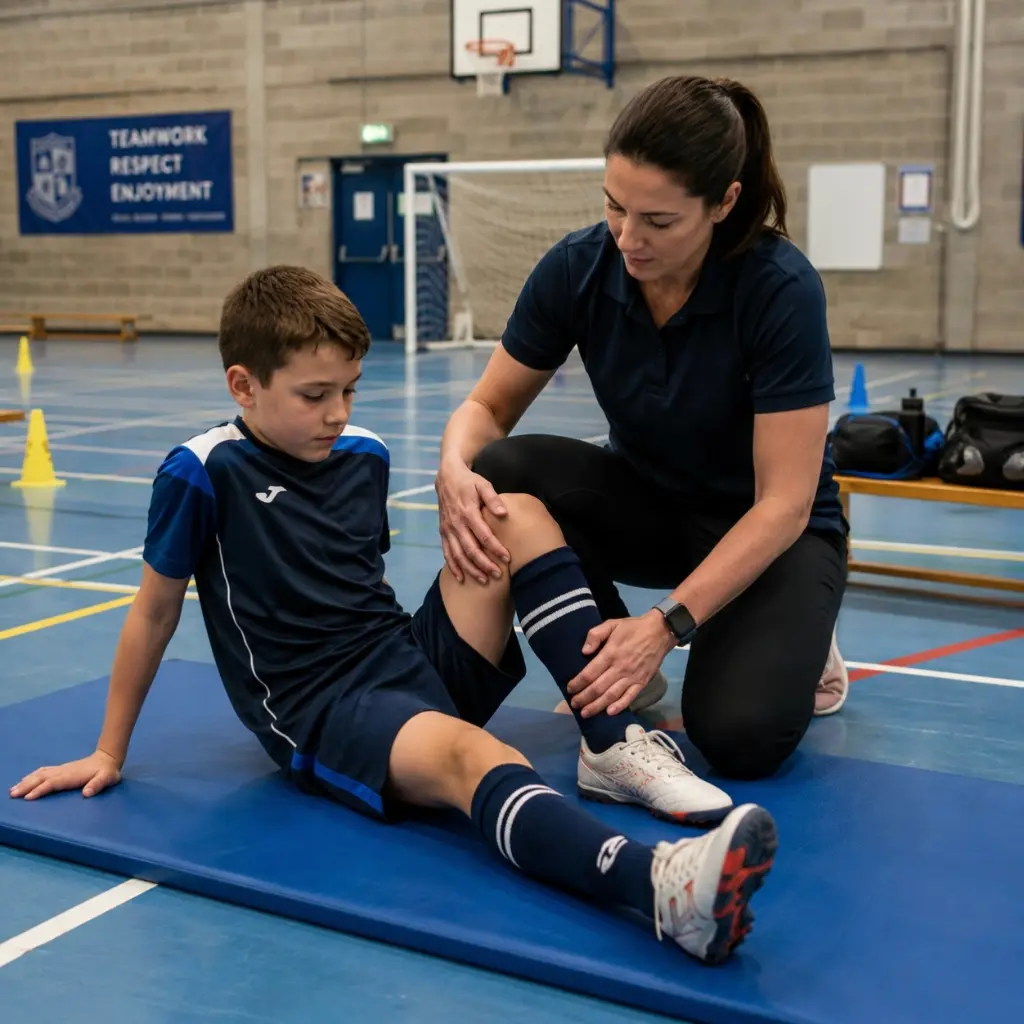
Sports injuries and MSK problems we see in children
Musculoskeletal pain in children and teenagers is common, and most of it is not serious. It still deserves a proper look, because pain that lingers changes how a child moves, and children are quick to give up a sport they love rather than say it hurts.
| Problem | Typical signs | Often seen in |
|---|---|---|
| Sever’s (heel pain) | Pain at the back of the heel during or after running and jumping, often limping after sport | Active children around 8–14, footballers especially |
| Osgood-Schlatter (knee pain) | A tender, sometimes swollen bump just below the kneecap; sore with kneeling, stairs and sprinting | Sporty children and teens during growth spurts |
| Pain at the front of the knee | Aching around or behind the kneecap with stairs, squatting or sitting for long periods | Teenagers, often runners, dancers and netballers |
| Ankle sprains | Swelling and pain after going over on the ankle; an ankle that keeps “giving way” afterwards | Any running or court sport |
| Muscle strains | Sudden pain in the hamstring, thigh, groin or calf while sprinting or kicking | Teenagers training more than their body is ready for |
| Back and neck pain | Aching with sport, sitting or carrying a school bag; stiffness in the morning | Gymnasts, dancers, cricketers, swimmers and growing teens |
| Joint hypermobility | Very flexible joints with aches after activity, frequent sprains, tiring easily | Any age; often noticed in dance and gymnastics |
| After a fracture or operation | Stiffness, weakness or loss of confidence once a cast or boot comes off | Any age |
If what your child has is not on the list, that does not mean we cannot help. Get in touch and we will tell you honestly whether physiotherapy is the right next step. Parents who want background reading can start with our guides to what causes musculoskeletal pain in children and preventing sports injuries in kids.
When to seek urgent medical help instead
See a GP urgently, call 111 or go to A&E — do not wait for a physio appointment — if your child has:
- a limb that looks misshapen, or they cannot put any weight through it after an injury
- a hot, red, swollen joint, or a limp together with a fever or feeling unwell
- pain that wakes them at night, or is there at rest and getting steadily worse
- unexplained weight loss, tiredness, bruising or pain in several joints
- back pain with numbness, weakness, or changes to bladder or bowel control
- a head injury with vomiting, drowsiness, confusion or worsening headache
Most children with sports pain have none of these. We screen for them at every first appointment, and if anything concerns us we will tell you plainly and point you to the right service.
Why see a children’s physiotherapist rather than an adult sports clinic
Growing bones behave differently
Children have growth plates: softer areas near the ends of bones. An injury that would be a simple sprain in an adult can involve the growth plate in a child, and heel and knee pain in growth spurts has causes adults do not get.
Growth spurts change the plan
Bones can lengthen faster than muscles adapt, leaving a child temporarily tight, less co-ordinated and more injury-prone. Treatment has to account for where they are in their growth, not only the sore spot.
Children explain pain differently
A seven-year-old will not describe pain the way an adult does. Paediatric physiotherapists are used to assessing through play, watching movement, and asking in ways that get a true picture.
It is all we do
PT Kids has worked only with children and young people since 2014. Our therapists are HCPC registered and the clinic is set up for children, not adapted from an adult gym.
What happens at an MSK or sports injury assessment
- The storyHow and when it started, what sport and how much, what makes it better or worse, and what your child wants to get back to.
- ScreeningWe check for anything that needs a doctor rather than a physio before going further.
- Movement and strengthWe look at the sore area and at how your child walks, runs, squats, hops or lands, because the cause is often away from where it hurts.
- A clear explanationWhat we think is going on, in plain language for you and your child, and how long it usually takes to settle.
- A plan you can followA written home programme, guidance on what sport they can keep doing, and a review date. No pressure to commit to a block on the day.
First appointments are usually an hour. Bring shorts, trainers, and any letters or scan reports you have. For how the clinic works generally, see our Doncaster clinic page and fees and what to expect.
Getting your child back to sport
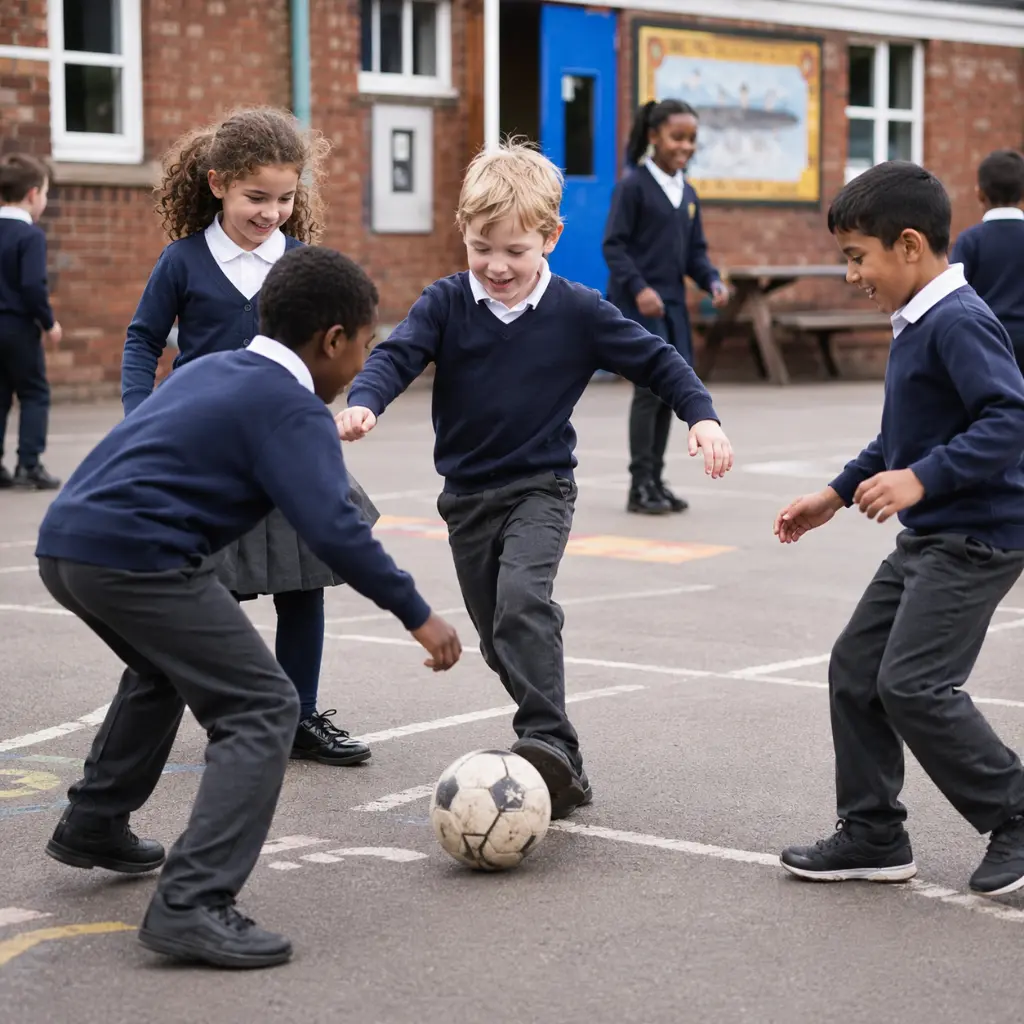
“Rest until it stops hurting” is the advice most families have already been given by the time they reach us. It often works for a fortnight and fails the first week back at training. Rest settles pain; it does not build the strength the sport demands.
Our approach is to keep children doing as much as is safe, reduce the specific load that is aggravating the problem, and build capacity in steps: pain-free daily activity first, then strength, then running and sport-specific drills, then full training, then matches. For children with a busy week of school PE, club training and weekend fixtures, simply mapping out the total load is sometimes the most useful thing we do.
Coaches and PE teachers: with your permission we are happy to share the return-to-sport plan, so everyone is working to the same stages.
NHS or private for a child’s sports injury?
NHS children’s physiotherapy in this area is provided by Doncaster and Bassetlaw Teaching Hospitals and needs a referral from a GP or another professional. For a painful, acute injury your GP, 111 or A&E is always the right first call. Families usually come to us when they want to be seen quickly, want a full hour with a paediatric specialist, or want hands-on help getting back to a specific sport. We explain how the two routes compare on our children’s physiotherapy in Doncaster page, and you can read about self-referral here.
Doncaster & Bawtry
The clinic is in Everton, just outside Bawtry. Physio in Doncaster
Gainsborough
Straight across on the A631. Physio in Gainsborough
Book a children’s sports injury assessment
Choose Initial Assessment below and pick a time that suits you. Prefer to talk first? Call 07557 537203 or email hello@ptkids.co.uk.
Questions parents ask
Do I need a GP referral for my child’s sports injury?
No. PT Kids accepts self-referrals, so you can book an assessment directly without a GP letter. If your child has any of the warning signs listed on this page, see a GP, call 111 or go to A&E first.
How much does a children’s sports injury assessment cost?
Initial assessments and therapy sessions at our Everton, Doncaster clinic are £85 per hour. The first appointment is usually an hour and includes a written summary and recommendations.
What ages do you see?
Children and young people aged 0–19. Most sports and musculoskeletal problems we are asked about are in school-aged children and teenagers, particularly during growth spurts.
Are growing pains and conditions like Osgood-Schlatter or Sever’s something physiotherapy can help with?
Often, yes. Growth-related heel and knee pain is common in active children. Physiotherapy usually focuses on managing training load, stretching and strengthening, and a plan for staying in sport where that is safe, rather than simply stopping everything.
Does my child have to stop playing sport?
Not always. Complete rest is rarely the whole answer. After assessment we agree what your child can keep doing, what to pause, and how to build back up, and we can share that plan with a coach or PE teacher if you want us to.
Where are you, and is there parking?
2 Wesleyan Court, Everton, Doncaster, DN10 5DN. There is free parking on site and a step-free entrance. The clinic is easy to reach from Doncaster, Bawtry, Retford, Worksop and Gainsborough.