Introduction
When a child mentions sore hips or starts limping around the house, it is natural for parents to feel concerned. Knowing what to look for, when to act quickly and when physiotherapy can help makes a real difference to outcomes. This guide explains the most common causes, the symptoms worth paying close attention to and how UK families can support their child through hip discomfort with the right professional support at the right time.
Understanding the Hip Joint in Children
The hip is a ball and socket joint that supports nearly every movement a child makes. It carries body weight, manages running and jumping and allows flexibility for sitting, kneeling and climbing. Because the hip is still developing through childhood, it is particularly sensitive to growth changes, sudden activity increases and injury. Pain may come from the joint itself, the surrounding muscles or even nearby areas such as the lower back or knees. Unusual movement patterns, such as toe walking in children, can sometimes indicate underlying issues that affect how the hip and lower limbs function together.
Common Causes of Hip Pain in Children
Causes of hip pain in children vary by age, activity level and overall development. Some settle quickly with rest, while others need careful assessment. Recognising the most familiar patterns helps parents respond with confidence.
Transient Synovitis (Irritable Hip)
Transient synovitis, often called irritable hip by GPs, is one of the most common causes of sudden hip pain in younger children. It typically affects children between three and ten years of age and involves temporary inflammation of the hip joint, often following a recent cold or virus. Children may limp, refuse to put weight on the leg or complain of pain in the groin or thigh. Symptoms usually settle within one to two weeks with rest. However, it is important to distinguish irritable hip from septic arthritis, which is far more serious and presents with fever, severe pain and an unwell appearance. Any child showing these signs needs urgent medical review.
Growing Pains
Growing pains in children often appear during periods of rapid growth. The discomfort is usually mild, comes and goes and tends to affect both legs, often in the evening or at night. Many children describe an aching feeling in the thighs, calves or behind the knees. True growing pains rarely isolate to the hip alone, so persistent pain in a single hip should always be assessed rather than dismissed as growth-related.
Developmental Hip Conditions
Some children develop hip pain due to changes in how the joint is forming. Perthes disease most commonly affects children between four and ten years of age and involves a temporary disruption to the blood supply in the head of the femur. Slipped capital femoral epiphysis is more often seen in adolescents, particularly those who are overweight or going through a growth spurt, and involves slippage at the top of the thigh bone. Developmental dysplasia of the hip is usually identified earlier in infancy, but can occasionally present later. These conditions affect joint structure and need orthopaedic input. They often cause persistent limping, stiffness and reduced range of motion.
Sports Strain and Minor Injuries
Active children involved in football, gymnastics, dance or athletics can sometimes develop hip discomfort linked to repetitive movement and physical strain. Growing bones, muscles and tendons are still developing, which means repeated training or sudden increases in activity may lead to soreness around the hip area. Pain often appears gradually after sport, although falls, playground trips, or bike accidents can also trigger discomfort more suddenly. While many mild aches improve with rest and time, ongoing pain, limping, or difficulty moving after activity or injury should always be assessed more closely.
Hip Pain at Night in Children
Hip pain at night in children deserves particular attention. Daytime soreness that eases with rest is often less concerning than pain that disturbs sleep. Night pain can come from growth changes, inflammation or, less commonly, more serious conditions. A child who repeatedly wakes crying with hip discomfort, or whose sleep is consistently disrupted, should be reviewed by a healthcare professional. Keeping a short diary of when the pain occurs can help doctors and physiotherapists spot patterns.
What to Do When Your Child Is Complaining of Hip Pain
A calm, structured response helps both you and your child. The steps below offer a practical starting point.
Observe and Note the Pattern
Make a note of when the pain started, what your child was doing beforehand, where exactly it hurts and whether it changes with movement. Watch for limping, reluctance to play or guarding one leg.
Apply Comfort Measures at Home
Warm baths, reassurance and calm handling often ease mild soreness. Avoid pushing through pain or insisting on activity if your child is clearly struggling.
How Paediatric Physiotherapy Helps Hip Pain in Children
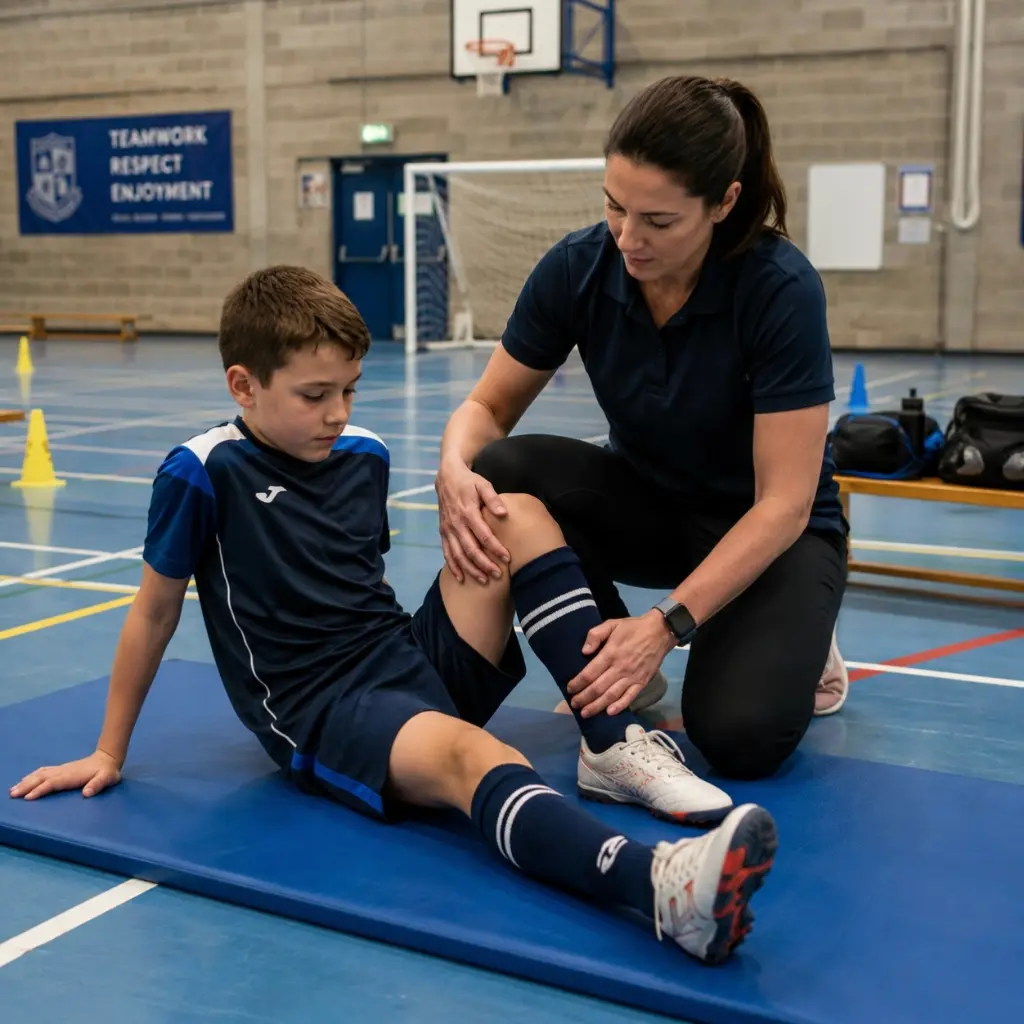
Physiotherapy plays a valuable role in many cases of hip pain. A paediatric physiotherapist examines the joint, surrounding muscles, walking pattern and overall movement to build a clear picture of what is going on.
Detailed Hip Assessment
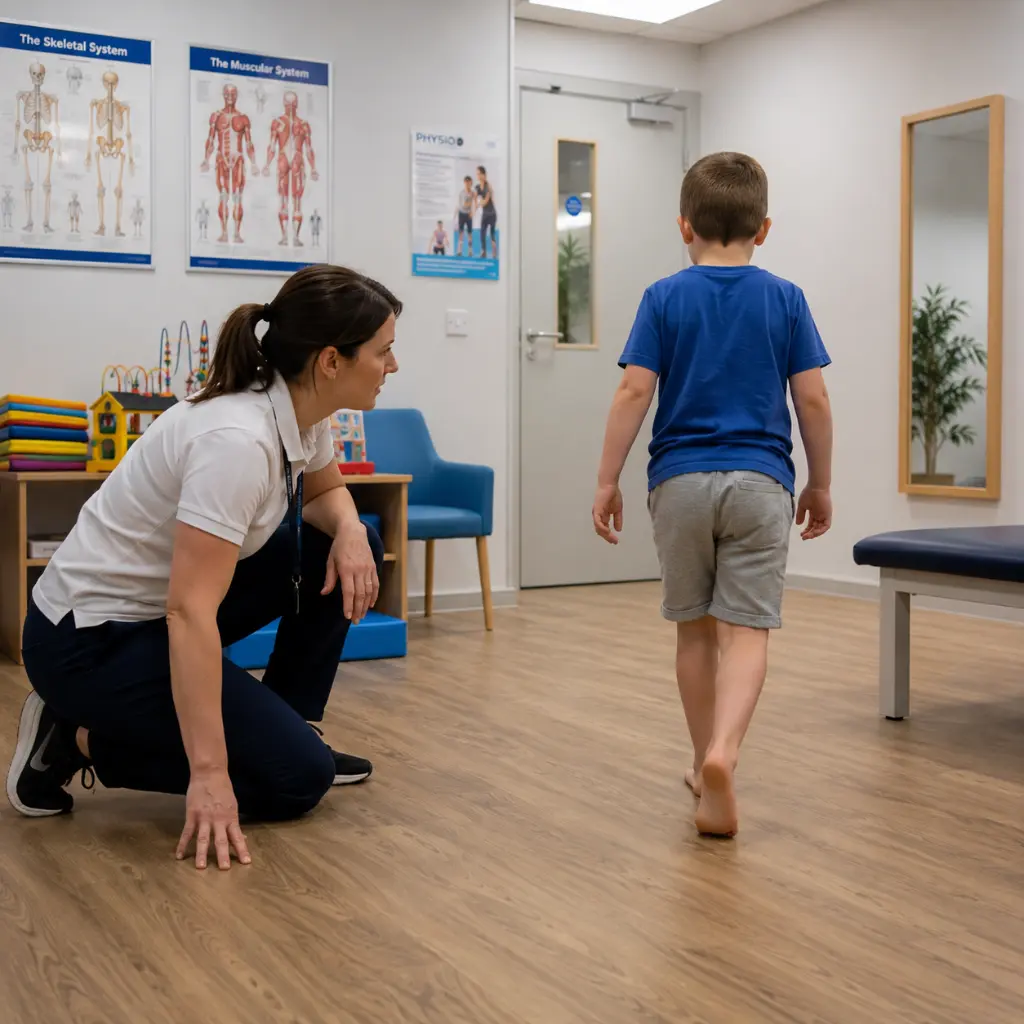
A thorough assessment includes hip range of motion, muscle strength, gait analysis and contributing factors such as leg length differences or postural changes. This helps pinpoint the source of the pain and rule out other contributing areas.
Tailored Exercise Programmes
Exercises are designed around the child’s age, condition and confidence. Stretching, strengthening and balance work all help the hip recover and reduce the risk of recurrence. Programmes are kept playful so children stay engaged.
Gait Retraining
Children who have been limping for a while often develop habits that linger after the original pain has eased. Gentle gait retraining helps the body return to a comfortable walking pattern.
Return to Sport and School Support
For active children, physiotherapy includes a structured return to PE, sport and play. Working with families, schools and clubs helps the child rebuild confidence without setbacks.
Rebuilding Physical Confidence
Recovering from hip pain is not only about improving physical movement. Restoring confidence through comfortable movement and active participation can also support social development, helping children feel more confident joining in with peers, games and group activities.
When to See a Physio for Your Child’s Hip Pain
You do not need to wait for a referral to seek physiotherapy support. Consider booking an appointment if your child:
- Has been limping for more than a few days
- Continues to complain of hip discomfort after rest
- Has reduced movement or stiffness in one hip
- Is avoiding sport, PE or favourite activities
- Has had repeated episodes of hip pain
- Is recovering from a confirmed hip condition
PT Kids offers paediatric physiotherapy across the UK, working alongside families, schools and GPs to support recovery and long-term movement health.
Conclusion
Hip pain in children covers a wide range of causes, from harmless growing pains to conditions that need swift medical input. Paying attention to the pattern, severity and impact of the pain helps families respond appropriately. Most children recover well with the right combination of rest, reassurance and tailored support. If your child is struggling with ongoing hip discomfort, PT Kids is here to help with paediatric physiotherapy designed around each child’s needs and family routine.
[wpcode id=”3871″]