Introduction
If your child hurls themselves at the sofa, spins in circles until they collapse laughing, or careers into furniture with what seems like genuine delight, you are not alone. Many parents and carers across the UK find themselves asking why their child is always moving and whether it is something to be concerned about. In most cases, this behaviour has a clear explanation rooted in how the child’s sensory system works. Understanding sensory seeking behaviour is the first step towards supporting your child more effectively at home, in school, and beyond. For additional guidance, exploring professional paediatric therapy support can provide practical strategies tailored to your child’s needs.
What Is Sensory Seeking Behaviour?
Sensory seeking behaviour refers to a child’s drive to seek out additional sensory input from their environment. Every child needs sensory stimulation to develop and function well, but some children need considerably more input than others to feel comfortable, focused, and regulated.
Children who are sensory seeking often have a high sensory threshold, meaning their nervous system requires a greater level of stimulation before it registers and responds. To meet that need, these children instinctively pursue intense movement, pressure, and physical sensation throughout the day, often in ways that leave parents puzzled or concerned.
Understanding the Vestibular and Proprioceptive Systems
Two sensory systems sit at the heart of this behaviour. The vestibular system, located in the inner ear, processes movement, balance, and spatial awareness. The proprioceptive system receives information from muscles and joints about where the body is in space and how much force is being applied.
When these systems are not receiving sufficient input, children seek it out through jumping, spinning, crashing, climbing, and rough physical play. This is not naughtiness or defiance. It is the child’s nervous system responding exactly as it is designed to.
The Sensory Reason Children Jump and Bounce
Jumping provides strong proprioceptive input through the muscles and joints while also activating the vestibular system. This combination makes it especially satisfying for children who need more sensory input to feel regulated. For many children, this type of movement helps them feel calmer, more organised, and better able to focus.
Jumping behaviour may look like:
- Jumping off sofas, beds, or stairs
- Bouncing on the spot during conversations or mealtimes
- Seeking trampolines, bouncy castles, or soft play with high intensity
- Jumping more frequently during excitement or transitions

The Reason Behind Your Child’s Spinning and Rolling
Spinning activates the vestibular system, which helps the brain process movement, balance, and spatial awareness. For some children, this type of input feels regulating rather than disorienting, allowing them to engage in spinning activities for longer periods without discomfort.
Parents may notice behaviours that go beyond typical play, such as repeated spinning, rolling, or seeking upside-down positions. This reflects a need for more movement input than everyday activities provide.
Spinning behaviour may look like:
- Spinning quickly and repeatedly during play
- Rolling across the floor or down slopes
- Hanging upside down from furniture or climbing equipment
- Spending extended time on swings or roundabouts
- Rocking back and forth during seated tasks
Why Does My Child Keep Crashing Into Things?
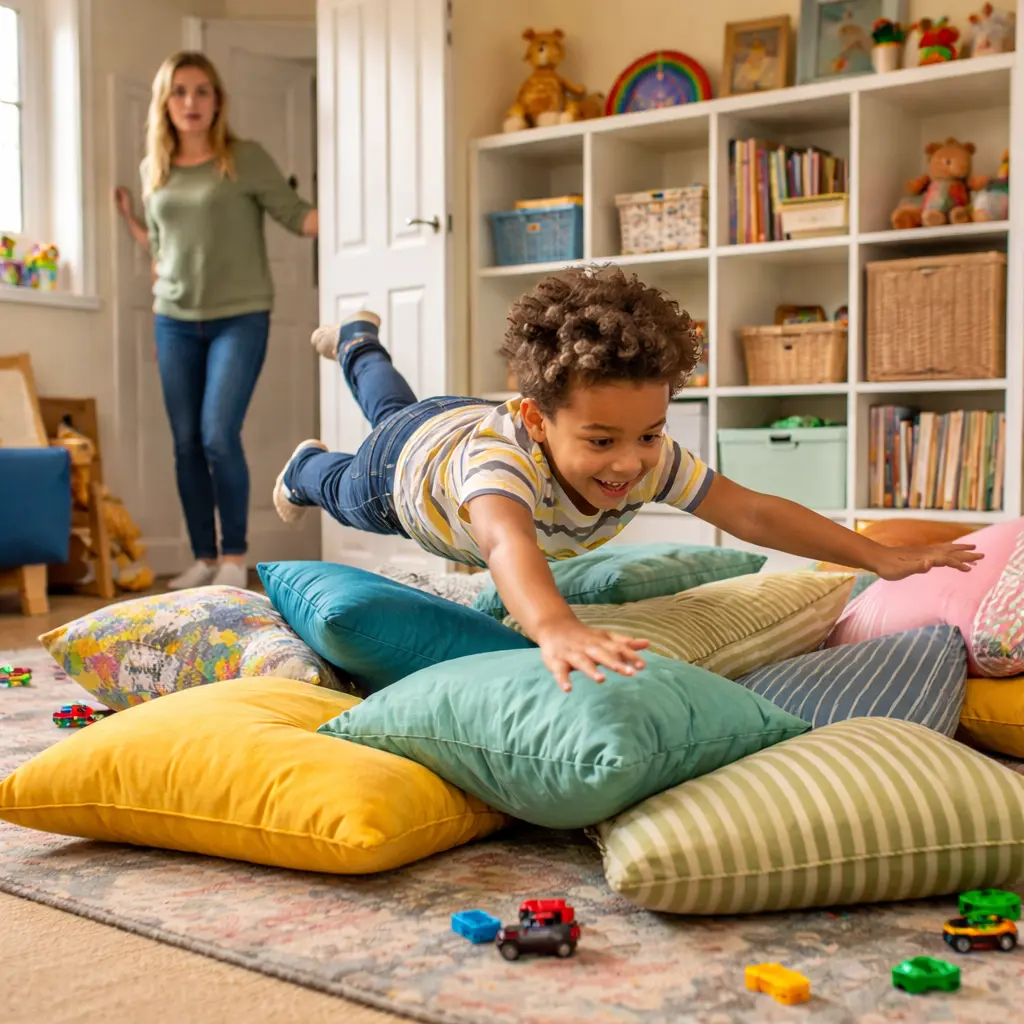
Crashing behaviour, where a child deliberately runs into walls, throws themselves onto the floor, or barrels into other people, is driven by the need for deep proprioceptive input. The pressure and force involved send powerful signals to the muscles and joints, delivering the sensory information the nervous system is seeking.
This behaviour is often the most alarming for parents and carers, particularly when it involves other children or results in minor injuries. It is important to understand that crashing is rarely as impulsive as it appears. For sensory-seeking children, it is purposeful behaviour driven by a genuine physiological need.
Crashing behaviour may look like:
- Running full speed into sofas, cushions, or padded surfaces
- Deliberately bumping into walls or objects when walking.
- Rough play that consistently exceeds what peers are comfortable with
- Throwing themselves to the ground or onto adults with force
- Seeking out contact sports, wrestling, or physically intense play
How These Behaviours Affect Daily Life
When sensory needs are not met, the effects extend beyond physical behaviour and can impact many areas of daily life. Exploring related challenges, such as the link between sensory difficulties and screen dependency, can also help provide useful context for how these needs influence behaviour.
- Sitting and attention: Children with high sensory thresholds often struggle to remain seated during lessons or structured tasks, which can be misread as inattention or a behavioural difficulty rather than an unmet sensory need.
- Emotional regulation: When sensory needs go unmet throughout the day, children often become overwhelmed, leading to meltdowns that can appear disproportionate to the immediate trigger.
- Sleep: Sensory dysregulation makes it difficult for many children to wind down, leading to delays in falling asleep and disrupted nights.
- Relationships: Persistent rough and impulsive physical behaviour can unintentionally affect friendships, particularly with peers who have lower physical thresholds.
Practical Strategies to Support Sensory-Seeking Children
You do not need a formal diagnosis to begin supporting a child with sensory seeking behaviour. Building targeted movement opportunities into the daily routine can make a meaningful difference to regulation, focus, and wellbeing.
- Before school or nursery: Short bursts of heavy physical activity, such as jumping, carrying a loaded rucksack, or doing wall push-ups, can help regulate the nervous system ahead of a period of sitting.
- After school: Allow time for free movement and physical play before expecting your child to settle for homework or quiet activities.
- Before homework or table tasks: A brief movement break involving heavy work activities such as chair push-ups, carrying books, or kneading playdough provides proprioceptive input that supports focus.
- Before bed: Calm proprioceptive activities such as firm massage, stretching, or use of a weighted blanket support the transition towards sleep without overstimulating the child.
A paediatric occupational therapist can assess your child’s specific sensory profile and create a tailored sensory diet, a structured plan of activities built into the daily routine. Occupational therapists work with children and families to do exactly this, helping children feel better regulated and more able to engage with learning and daily life.
When to Seek Professional Support
If your child’s jumping, spinning, or crashing behaviour is significantly affecting their safety, school performance, or emotional wellbeing, early support makes a genuine difference. Seeking guidance sooner rather than later is always the more effective approach.
At PT Kids, our occupational therapists carry out thorough sensory assessments for children and work closely with families, schools, and nurseries to put practical, individualised support in place. You do not need a referral or a diagnosis to get in touch and reach out to straightforward and constructive first steps.
Conclusion
Children who are always jumping, spinning, or crashing into things are communicating a genuine sensory need that their nervous system is working hard to meet. With the right understanding and practical strategies in place, these behaviours become far more manageable, and children can feel more comfortable, regulated, and ready to engage with daily life. PT Kids is here to support families with experienced, child-centred occupational therapy that makes a real and lasting difference.