Introduction
One of the most common questions parents and carers ask is whether their child’s difficulties are something to monitor or something to act on. It is a genuinely difficult judgement, particularly when development varies so widely between children and waiting lists can feel overwhelming before you have even started. Knowing when to seek therapy for a child, and when it is reasonable to take a watching brief, is something many UK families wrestle with quietly. This article aims to give you a clear and honest framework for making that decision with confidence.
Understanding the Difference Between a Delay and a Difference
Not every child who develops at a slower pace has a difficulty requiring formal intervention. Children develop at their own pace, and a wide range of progress is considered typical. The distinction worth understanding is between a delay that is resolving naturally and one that is persisting, widening, or beginning to affect daily life. When a difficulty is not improving despite time and support at home, that is usually the point at which professional input becomes genuinely valuable.
Signs That It May Be Time to Seek Support
Some patterns suggest a child may benefit from professional assessment rather than continued waiting.
It is worth seeking support if your child is:
- Missing developmental milestones by a significant margin with no signs of catching up
- Experiencing persistent emotional difficulties such as anxiety, withdrawal, or low mood
- Displaying behavioural changes lasting several weeks without an obvious or resolving cause
- Struggling at school in ways that are affecting learning, friendships, or confidence
- Avoiding activities, people, or environments they previously engaged with comfortably, including reduced social interaction such as limited eye contact
- Showing physical difficulties with movement, coordination, or daily tasks that are not improving
The key question is not whether the difficulty exists, but whether it is affecting your child’s ability to participate fully in everyday life.
The Case for Acting Sooner Rather Than Later
A common concern amongst parents is that seeking therapy feels like overreacting. Seeking an assessment does not commit you to treatment. What it does mean is that you have current, professional information about your child’s development rather than ongoing uncertainty.
Early intervention is consistently recognised within paediatric health and education settings as more effective than later support. Difficulties identified and addressed while a child is young tend to respond more readily to therapy. Waiting to see whether a child grows out of something is sometimes appropriate, but it carries a real opportunity cost when the difficulty is real and persistent.

What Happens if You Wait Too Long
When difficulties go unaddressed, they rarely remain static. A child who struggles with coordination in early years may find physical education increasingly difficult at school. A child with unmet sensory needs may develop secondary emotional and behavioural difficulties. A child showing early signs of anxiety may find social situations progressively harder to manage. Difficulties become more manageable with the right support, and that support is most effective when it begins early.
When Watching and Waiting Is Reasonable
Not every concern requires an immediate referral. The key is knowing what you are watching for, how long is reasonable, and what should prompt you to act.
Watching and waiting is generally reasonable when:
- Your child has recently experienced a significant life event such as a bereavement, parental separation, a house move, or the arrival of a new sibling.
- Your child has started a new nursery, primary school, or secondary school and is showing adjustment difficulties in the early weeks.
- A developmental milestone is slightly delayed, but consistent and observable progress is being made.
- Your child had a minor injury, and movement or confidence is gradually improving without persistent pain.
How to Monitor Effectively
Watching and waiting does not mean doing nothing. Keep a brief written record of specific behaviours, how often they occur, and any triggers you notice. Note whether the difficulty is improving, staying the same, or worsening. Share your observations with your child’s school or nursery, as children often present differently across settings. Speak with a therapist if you are unsure whether what you are observing falls within a typical range. Trust your instincts. A persistent sense that something is not right is always worth taking seriously.
Reasonable Time Frames by Age
| Age Group | Reasonable Waiting Period | Key Consideration |
| Under 2 years | Two to four weeks | Development moves quickly. Early referral is rarely harmful. |
| Two to five years | Four to six weeks | Critical window for speech, motor, and social development. |
| Five to eleven years | Six to eight weeks | Consider the impact on school learning and peer relationships. |
Clear Signs That Waiting Should End
Seek support promptly if:
- The difficulty has not improved after a reasonable period despite support at home.
- The behaviour or difficulty is getting worse rather than staying the same.
- Your child is increasingly avoiding activities, environments, or people.
- The difficulty is now affecting more than one area of life.
- Your child is expressing distress or low self-worth linked to the difficulty.
- Teachers or other professionals have raised concerns that align with your own observations.
- Physical difficulties such as pain, movement avoidance, or regression in motor skills are present and not resolving.
Any one of these signs is sufficient reason to seek a professional assessment. Seeking clarity is a reasonable and responsible response to valid concern.
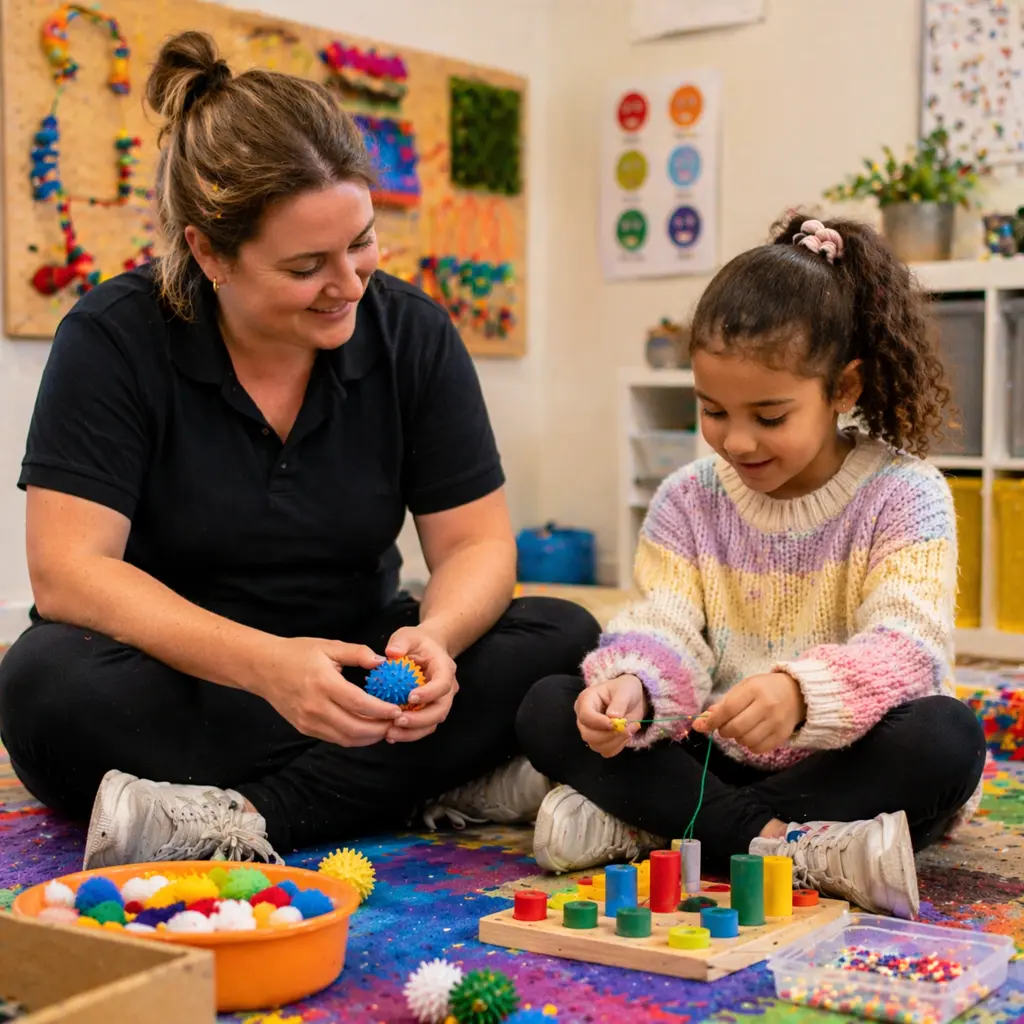
How Physiotherapy and Occupational Therapy Fit Into This Decision
For many families, the question of when to seek therapy centres on physical development, movement, coordination, and the ability to manage everyday tasks.
Physiotherapy may be beneficial if your child:
- Has persistent difficulties with balance, coordination, or gross motor skills
- Complains of pain or discomfort during movement or physical activity
- Has had an injury or illness affecting movement and mobility
Occupational therapy may be beneficial if your child:
- Has difficulty with fine motor tasks such as writing, cutting, or fastening clothing
- Has sensory processing difficulties affecting behaviour, learning, or daily routines
- Finds self-care tasks such as dressing or eating significantly challenging
- Is struggling to access learning or social participation at school or nursery
At PT Kids, our physiotherapy and occupational therapy teams work with children and families, providing thorough assessments and practical, individualised support. If you are unsure whether your child’s difficulties warrant an assessment, getting in touch is a helpful and pressure-free first step.
Conclusion
Knowing when to wait and when to seek therapy for a child is one of the harder judgements parents face. Trust your instincts, stay observant, and seek professional input when difficulties are persistent, worsening, or limiting your child’s daily life. An assessment provides clarity rather than commitment, and early support is nearly always more effective than delayed support. PT Kids is here to help families navigate these decisions with experienced, honest, and child-centred guidance.
[wpcode id=”3743″]