
Introduction
Some children actively seek movement, noise, or touch, while others feel easily overwhelmed by busy environments, certain textures, or sounds. These differences often relate to how a child processes sensory input, and they can affect everyday life at home, nursery, or school. Understanding sensory seeking vs sensory avoiding helps parents make sense of behaviours that might otherwise feel confusing or worrying.
This article explains how sensory seeking and sensory avoiding behaviours show up in children, why they occur, and how occupational therapy can help. For families navigating sensory processing challenges, early understanding and supportive intervention can make daily routines calmer, improve confidence, and support school readiness. At PT Kids, occupational therapy focuses on helping children feel regulated, capable, and comfortable within their world.
Understanding Sensory Processing in Children
Sensory processing refers to how the nervous system interprets and reacts to information from the senses. This includes sounds, movement, touch, balance, and body awareness. For many children, this process happens smoothly, allowing them to move, learn, and interact with ease. For others, sensory processing issues can make everyday situations feel overwhelming or under-stimulating.
In the UK school and home environment, sensory processing challenges may affect attention in class, participation in PE, handwriting tasks, or emotional regulation at the end of a busy day. Occupational therapists often use the term sensory processing difficulties descriptively to explain these patterns, focusing on how sensory responses affect a child’s daily functioning rather than labels.
What Is Sensory Seeking?
Sensory seeking behaviours occur when a child’s nervous system needs more sensory input to feel organised and alert. These children often appear constantly on the move or drawn to intense sensations, not because they are misbehaving, but because their bodies are seeking regulation.
Many parents notice sensory seeking behaviours through everyday activities, such as difficulty sitting still at the table, frequent crashing into furniture, or a strong preference for rough play. In school settings, this may affect concentration, posture, or handwriting. Occupational therapy helps children meet their sensory needs in safe, purposeful ways that support learning and independence, rather than disrupting daily routines.
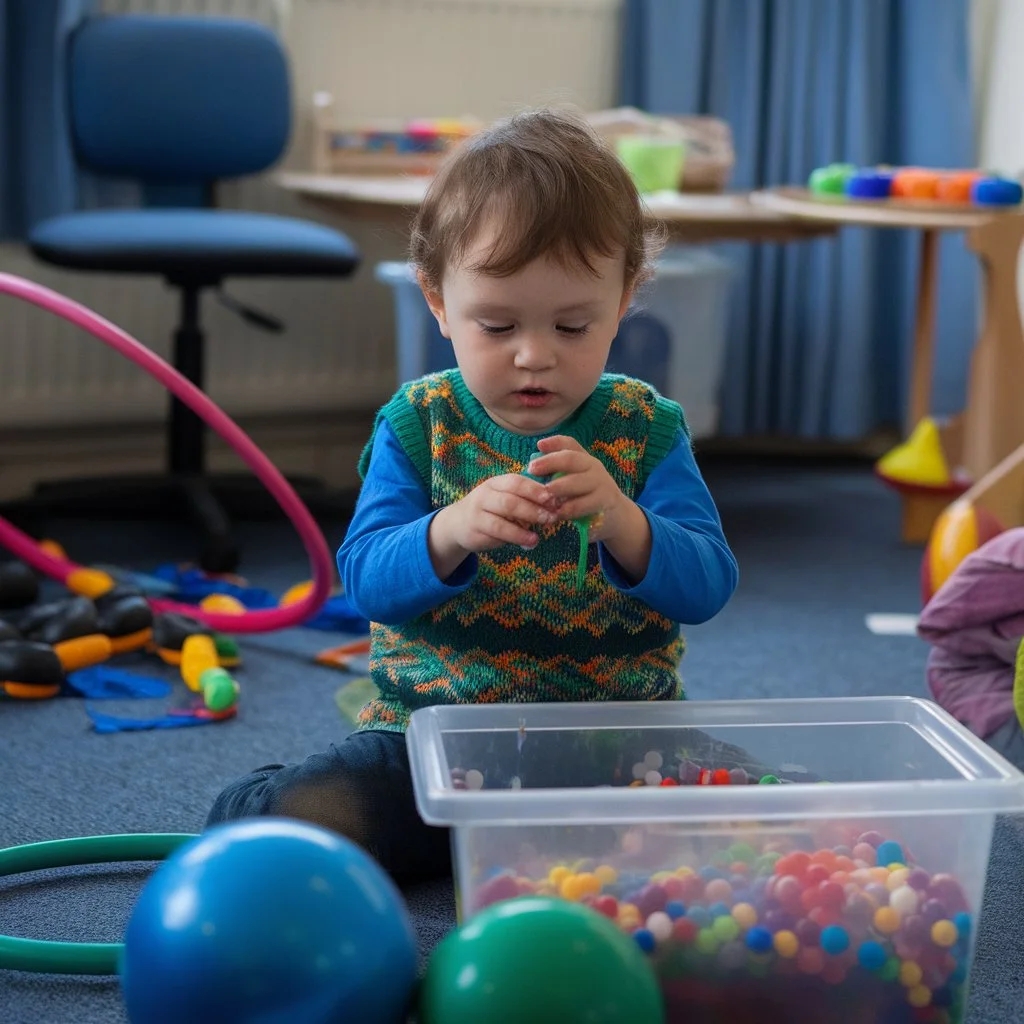
What Is Sensory Avoiding?
Sensory avoiding behaviours happen when a child experiences sensory input too intensely. Sounds, textures, movement, or visual environments may feel uncomfortable or distressing, leading the child to withdraw or avoid certain situations. These responses are protective rather than defiant.
In UK families, sensory avoidance may appear as distress during school drop-off, resistance to specific clothing, or difficulty coping with busy classrooms and playgrounds. Sensory sensitivities can also contribute to fatigue and emotional overwhelm by the end of the day. Occupational therapy supports children by helping them gradually build tolerance, adapt environments, and develop sensory regulation strategies that feel safe and manageable.
Can a Child Be Both Sensory Seeking and Avoiding?
A common question parents ask is whether a child can show both patterns, and the answer is yes. Many children demonstrate a mix of sensory seeking and avoiding behaviours, depending on the type of sensory input and the situation. For example, a child may seek movement through jumping or spinning, yet feel distressed by loud noise or crowded spaces. This does not mean anything is “wrong.” It reflects how complex sensory processing can be. Understanding this balance helps families respond with confidence and consistency.
How Occupational Therapy Supports Sensory Regulation
Occupational therapy focuses on helping children develop effective sensory regulation so they can participate fully in daily activities. At PT Kids, therapy sessions are child-friendly, play-based, and tailored to each child’s sensory processing challenges and functional goals.
Support may include sensory-based strategies that improve body awareness, attention, and emotional control. Therapy also considers real-life routines, such as classroom demands, handwriting tasks, dressing, and transitions. With the proper support, children learn to recognise their sensory needs and use strategies that help them feel calm, confident, and ready to engage at home and school.

Supporting Your Child at Home and School
Parents often worry about how to manage sensory meltdowns or challenging behaviours outside therapy sessions. Occupational therapy guidance helps families and schools work together to support consistency across environments. This might involve adapting routines, reducing unnecessary sensory stress, or building in movement and calming opportunities during the day. With UK school expectations in mind, small changes can make a big difference to a child’s comfort and confidence.
Conclusion
Understanding sensory seeking vs sensory avoiding helps parents see behaviours through a developmental and supportive lens. These sensory responses are part of how a child’s nervous system works, not a reflection of effort or behaviour choices. With skilled occupational therapy, children can build regulation, confidence, and independence across home, school, and play.
PT Kids offers personalised, evidence-based occupational therapy designed around UK children’s developmental needs and daily routines. Get in touch to book an appointment and learn how personalised therapy support can help your child thrive.


