Introduction
Children who frequently shift, slump, or leave their seat during learning activities are not necessarily being inattentive. When a child is struggling to sit still, it’s easy to assume they’re distracted or not trying hard enough. In reality, staying seated with good posture is a complex skill that relies on strength, coordination, sensory regulation, and attention working together.
For some children, especially around early primary school age, sitting upright at a desk for extended periods may demand more from their bodies than they are developmentally ready to manage. This article explores why children find sitting still so challenging, how desk posture links closely to learning and focus, and how paediatric occupational therapy can provide practical support to build these underlying skills. Understanding the reasons behind these difficulties helps parents respond with confidence rather than frustration.
Why Sitting Still Is Harder for Children Than Adults
Many parents are surprised to learn that sitting still is not a natural or easy skill for children. It requires postural stability, endurance, and sustained attention, all of which are still developing during childhood. In UK classrooms, children are expected to remain seated for longer periods than ever before, often before their bodies are fully ready.
Children with high activity levels or a strong need for movement may appear restless, but this movement often helps them stay alert and regulated. When the body struggles to maintain posture, the brain shifts focus to staying upright rather than listening, writing, or concentrating on instructions.
The Role of Postural Control and Core Strength
One of the most common reasons children struggle at the desk is poor postural control. Sitting upright requires the core muscles, shoulders, and hips to work together to hold the body steady over time. If these muscles fatigue quickly, children naturally fidget, slump, or change position to cope.
Parents may notice their child leaning on the desk, wrapping legs around chair legs, or lying across the table during tasks. These are not bad habits; they are signs the body is searching for stability. Supporting postural stability is a key focus of paediatric physiotherapy and occupational therapy.
Desk Setup and Classroom Seating Challenges
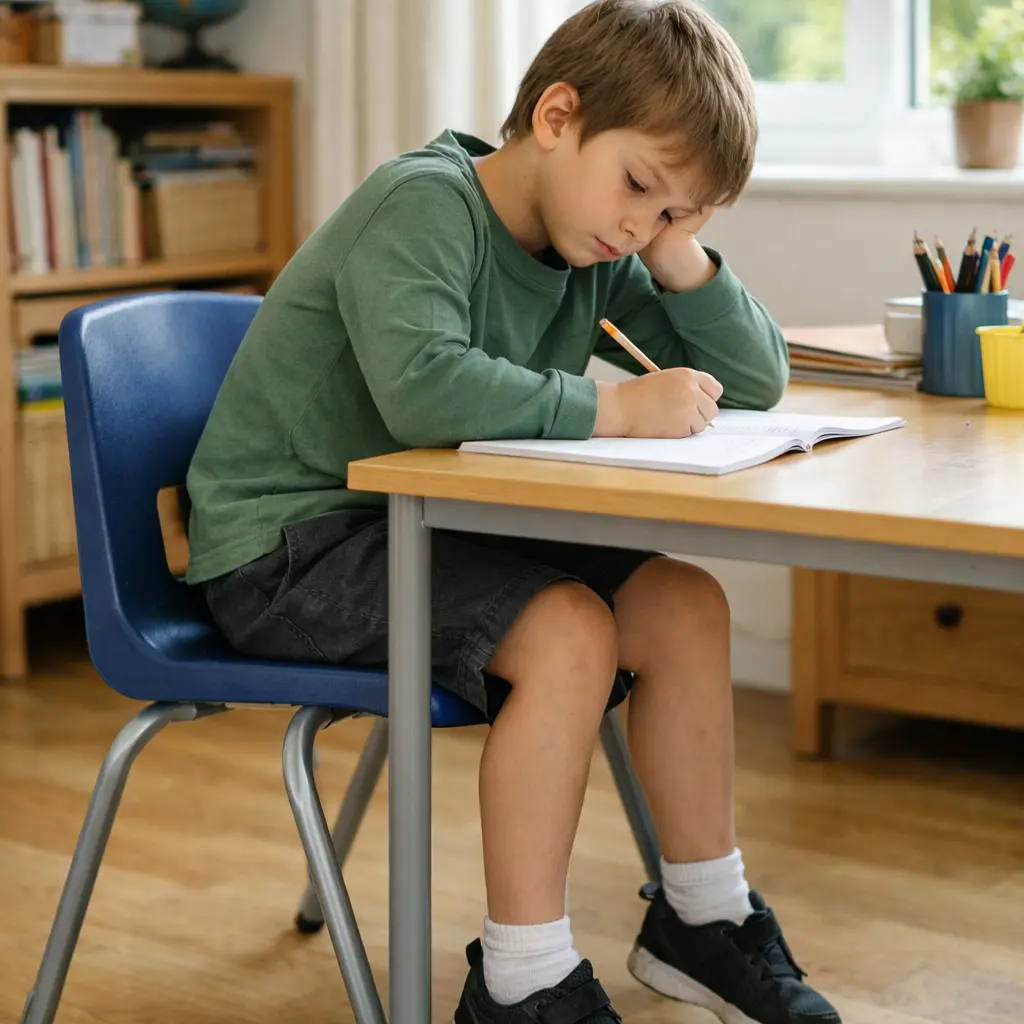
Even children with good strength can struggle if their desk setup does not suit their size. Many classroom seating challenges arise because chairs and desks are not adjusted to support children properly. Feet dangling, desks that are too high, or chairs without back support make maintaining posture far more difficult. These physical discomforts can also contribute to emotional overwhelm, which is often misunderstood in discussions around meltdowns vs tantrums in young children.
Parents often ask what the correct posture is for sitting at a desk. In simple terms, children need their feet supported, hips and knees at a comfortable angle, and the desk positioned so writing does not strain the shoulders or neck. Learning how to help posture at the desk starts with ensuring the environment supports the child, not works against them.
Why Sensory Processing Affects a Child’s Ability to Sit Still
For some children, difficulty sitting still is closely linked to sensory processing and regulation. Movement provides essential feedback to the body and brain, helping children feel organised and focused. When this input is lacking, children may move more to meet their sensory needs.
This is especially common in children who experience attention and concentration difficulties. A child who appears distracted may actually be trying to stay alert by shifting, rocking, or standing. Understanding this link helps parents and teachers support focus without expecting children to remain unnaturally still.
When Sitting Still Affects Learning at School
Parents often become concerned when a 6-year-old is struggling to sit still at school, particularly if teachers report reduced focus or unfinished work. Poor posture can affect handwriting, reading stamina, and confidence during classroom tasks. Over time, this can impact learning and self-esteem. Small difficulties during writing, PE lessons, or carpet time can quickly add up. Early support helps children build the physical foundations they need for school readiness, making classroom demands feel manageable rather than exhausting.
How Occupational Therapy and Physiotherapy Can Help
At PT Kids, therapists look beyond behaviour to understand why a child is struggling physically or developmentally. Therapy programmes focus on improving strength, coordination, posture, and sensory regulation in ways that fit naturally into a child’s daily routine.
Support may include improving core stability, exploring how to maintain good posture at the desk, adapting seating, and building movement breaks into the day. Therapy is always personalised, helping children feel successful rather than singled out, and supporting long-term independence at school and home.
Conclusion
When a child is struggling to sit still, it is rarely about motivation or behaviour alone. Sitting upright with good desk posture requires strength, stability, sensory regulation, and focus — all skills that develop over time. These same foundations also influence how confidently children engage with others, and may explain why some prefer quieter, more independent ways of playing, particularly in busy classroom settings. With the right support, children can build these underlying skills and feel more confident both socially and academically.
PT Kids provides warm, evidence-based physiotherapy and occupational therapy tailored to UK families, supporting posture, movement, and learning in everyday life. Take the next step by arranging an appointment to discover supportive, effective therapy solutions tailored to your child’s needs.